After the week long workshop on the Isle of Mull had ended I had a day out to myself to get some fresh images of the otters. I have been following an otter for over two years now on the very beautiful Loch Spelve. I have named him Eric, not very original but it seems to fit him quite well – Eric the Otter.
He is quite distinctive with a white patch on his chest and a kink in the tail – on the last two inches of the tail. He can be found on most areas of this large sea loch, which means he can be difficult to locate.

Eric the Otter, with his white chest patch
I had seen him a couple of times through the week when conducting the workshop. He was working very hard catching fish. He was working the north coastline of Loch Spelve in the seaweed and kelp. He can be seen from a distance because of the broken tail end, as the otter dives the tail comes out of the water and is the last thing visible that is seen before it goes under.
It’s nice to be able to come along and see the same characters trip after trip. This is the third year I have visited the island, three times in each year and have been lucky enough to find Eric every time. Their life span is four to six years with some otters living for eight to twelve years. Their diet consists of fish and shellfish which takes up about 80% of their diet, birds and frogs are also taken.

Eric with a large fish
They have been known to eat young otters during times of great hardship. They are a member of the weasel family, the only member that is amphibious. They have acute sense of sight, smell and hearing. Their eyes are situated at the top of their head so they can see when the rest of its body is under water. Otters are incredible swimmers and fish catchers but they can only hold their breath for twenty seconds, which is a crutial piece of information when stalking them along the shoreline.

Eric with his crooked tail and white patch eating another fish
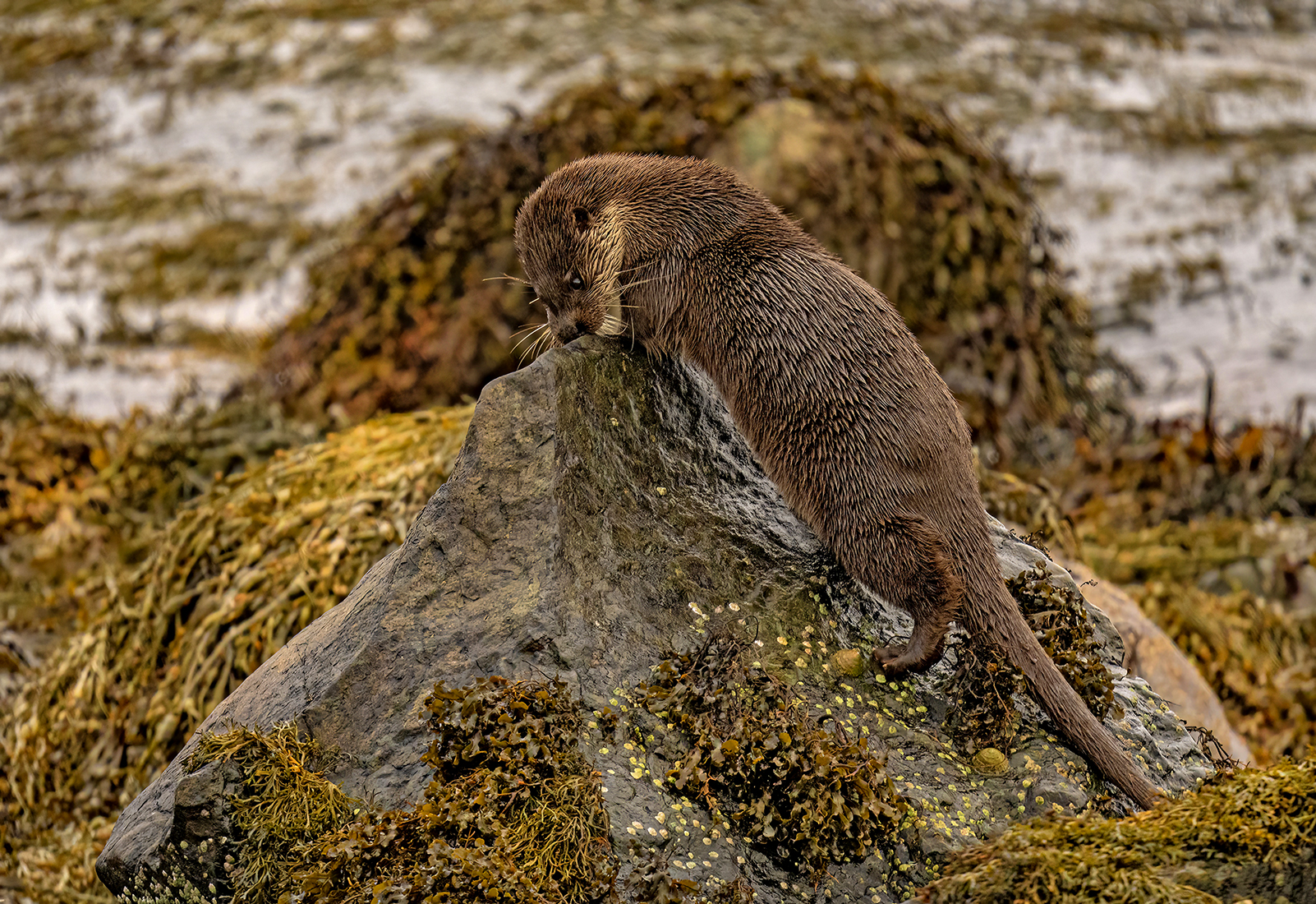
Eric is the most recognizable otter because of his markings and tail disfigurement, he can be seen along the loch edges working the seaweed and kelp. When feeding he seems to be preoccupied with his task and getting close to him can be a little easier. He hunts along the shore line in one direction, so setting your spot 50 metres along from where he works is a good tactic, and just wait for him to come along.
Getting behind a large boulder and sitting a bean-bag on top for the camera to sit on is my preferred method. You must be down wind of your subject and keep very still, if he sees, hears or smells you he will disappear in an instant.

A very alert Eric became suspictious when he heard the camera shutter
One of the giveaways when taking pictures at close quarters is the shutter clicking away in multi shot mode. Eric heard it on a number of occasions but if you keep perfectly still the moment will pass and feeding will resume, and if you’re careful then you can get some good results.

Eric feeding in the sun on the local fish population
I will be running another workshop in October 22nd until 27th, if you would like to photograph otters on the Isle of Mull give me a call or send me an e-mail to discuss it further. The group size is a maximum of three. I have one place taken already.